FRP roofing sheets (Fiberglass Reinforced Plastic), also known as fiberglass or GRP roofing sheets, are widely used in industrial buildings, factories, warehouses, chemical plants and commercial structures across Pakistan. Available in translucent and opaque finishes, FRP sheets offer a combination of lightweight construction, corrosion resistance, durability and natural daylight transmission.
Unlike conventional metal roofing, FRP does not rust or corrode. Translucent FRP sheets can also be installed alongside metal roofing panels to introduce natural daylight into industrial buildings, reducing dependence on artificial lighting during daytime operations.
However, not all FRP roofing sheets offer the same performance. Manufacturing process, fiberglass content, resin quality, thickness and UV protection significantly influence their strength, service life and price.
In this guide, we explain the different types of FRP roofing sheets, what determines their price, how they compare with alternative roofing materials, and what to consider before selecting sheets for your project.
FRP roofing sheets are composite panels manufactured using fiberglass reinforcement embedded in a polyester resin matrix. The combination produces a lightweight material with excellent mechanical strength, dimensional stability and resistance to corrosion.
The fiberglass provides structural reinforcement, while the resin binds the fibres together and protects the laminate.
FRP sheets are manufactured in different profiles, thicknesses, colours and finishes depending on their intended application. Common configurations include:
The quality of an FRP sheet depends not simply on its thickness but also on its glass-to-resin ratio, manufacturing process and material formulation.
FRP roofing sheets are generally quoted per square foot. However, there is no single price applicable to all FRP sheets. Two sheets with the same thickness can have considerably different costs and performance characteristics.
The following factors determine the price:
Thickness is one of the primary factors affecting the cost of FRP sheets.
Common industrial applications use different thicknesses depending on the roof design, support spacing, wind loads and intended service conditions.
Thicker sheets generally require more raw material, but thickness alone does not determine strength. A properly engineered 3 mm machine-made FRP sheet may offer better performance than a thicker sheet manufactured using an inconsistent manual process.
For industrial roofing applications, selecting the appropriate thickness should involve considering the complete laminate construction rather than thickness alone.
At Fibre Craft Industries, we manufacture machine-made FRP sheets from 1 mm to 5 mm thickness.
Fiberglass reinforcement is responsible for much of the mechanical strength of FRP roofing sheets.
Sheets manufactured with a higher and properly controlled glass-fibre content generally offer better structural performance than laminates containing excessive resin.
Resin quality is equally important. The resin system determines how well the sheet withstands environmental exposure, moisture, temperature variations and chemical conditions.
At Fibre Craft Industries, our manufacturing process ensures high fiberglass content, providing excellent mechanical strength to our FRP sheets.
The manufacturing process has a significant influence on the consistency and quality of FRP roofing sheets.
Handmade FRP sheets are generally produced through manual resin application and fiberglass reinforcement. The quality can vary depending on the operator, material distribution and curing conditions.
Machine-made FRP sheets are manufactured through a controlled production process that allows better consistency in:
For large industrial roofing projects, consistent manufacturing quality is particularly important because thousands of square feet of material may be installed across the same building.
At Fibre Craft Industries, we manufacture machine-made FRP sheets using controlled production processes and engineered fiberglass-reinforced laminates for industrial roofing and cladding applications.
Prolonged exposure to sunlight is an important consideration when selecting roofing sheets for outdoor applications in Pakistan.
Depending on the application, UV protection can be incorporated in FRP Sheets through suitable resin formulations, UV-resistant surface systems or protective films.
For roofs exposed to direct sunlight throughout the year, it is important to specify the UV protection system rather than relying on the general description of a sheet as UV-resistant.
At Fibre Craft Industries, we manufacture UV Gelcoated FRP sheets which provide excellent UV resistance and long life.
Translucent FRP sheets are designed to transmit natural daylight into buildings. They are commonly installed as skylight panels within otherwise opaque metal roofing systems.
Opaque FRP sheets contain pigments and are used where complete light coverage is required.
The formulation, pigmentation and required finish can affect the overall price.
FRP roofing sheets can be manufactured in different corrugated profiles to match existing metal roofing systems.
Standard and custom profiles may have different manufacturing requirements.
Sheet length is another important consideration. For large industrial roofs, longer sheets can reduce the number of end joints, potentially reducing installation time and the number of locations requiring sealing.
Fibre Craft Industries can manufacture long FRP roofing sheets, with lengths of approximately 40 feet possible where transportation and site handling conditions permit.
Large industrial projects generally benefit from better production economics compared with small individual orders.
Transportation, packaging, loading and delivery distance also influence the final delivered price.
FRP roofing sheets are used across a variety of industrial and commercial applications.
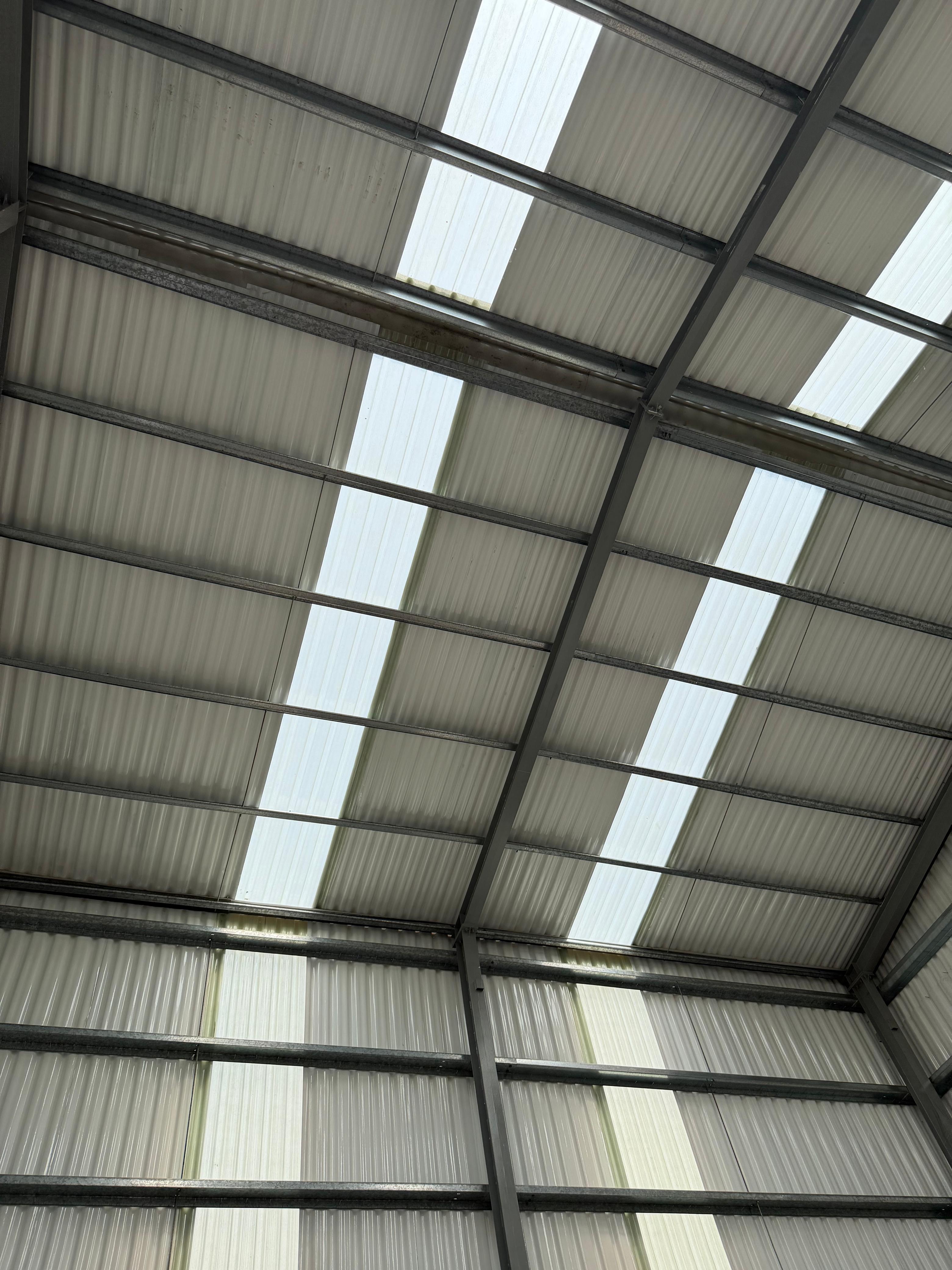
Industrial environments involving chemical fumes, moisture and corrosive atmospheres can accelerate the deterioration of conventional metal roofing.
FRP roofing and cladding systems offer an alternative because fiberglass composites do not undergo conventional metallic rusting.
The specific resin system and UV Gel-coated FRP sheets should, however, be selected according to the chemicals, concentrations and operating temperatures involved.
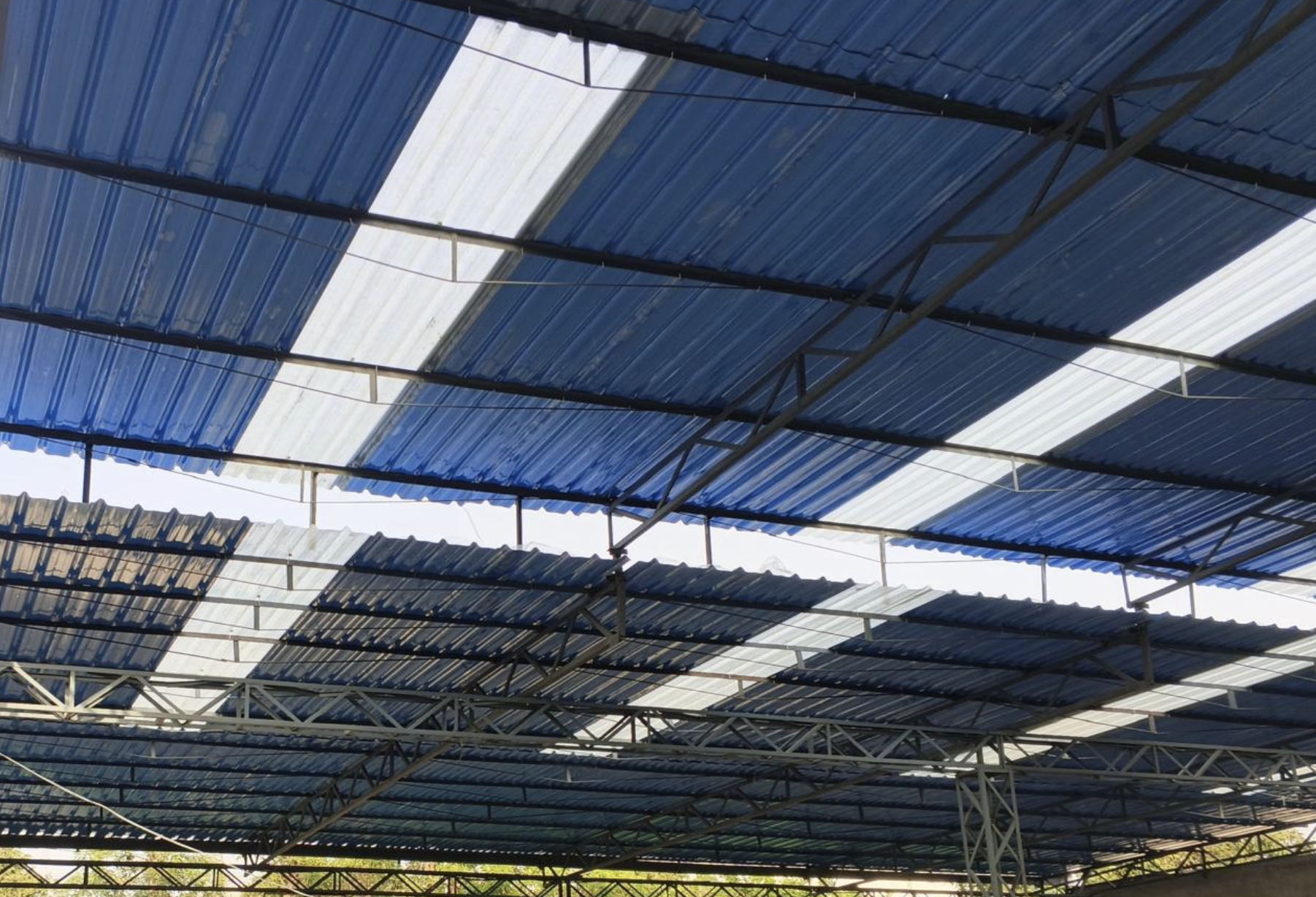
Textile mills, dyeing units and processing facilities often operate in environments with elevated humidity, moisture and chemical exposure.
FRP roofing and wall cladding provide a corrosion-resistant alternative to conventional metal sheets in suitable applications.

Translucent FRP panels can introduce natural daylight into agricultural buildings.
Opaque FRP roofing sheets can also be used where a complete roofing cover is required.

FRP sheets are also suitable for applications such as:
Choosing the right roofing material depends on the building environment, structural requirements, budget and expected service life.
FRP offers several advantages for industrial buildings:
1. Corrosion Resistance
Unlike galvanized or coated steel sheets, FRP does not rust. This makes it particularly useful in environments involving moisture, chemical fumes and corrosive atmospheric conditions.
2. Lightweight Construction
FRP sheets have a relatively low weight compared with many conventional roofing materials. This can help reduce the additional dead load imposed on existing roof structures when replacing heavier roofing materials.
3. Natural Daylight
Translucent FRP sheets allow daylight to enter industrial buildings. Their light transmission and diffusion characteristics can help distribute natural light across working areas.
4. Design Flexibility
FRP sheets can be manufactured in different thicknesses, profiles, colours and lengths to accommodate specific roofing requirements.
5. Low Maintenance
FRP does not require conventional anti-rust painting or corrosion protection. Appropriate installation, periodic inspection and cleaning help maintain long-term performance.

One of the most important considerations when purchasing FRP roofing sheets is the manufacturing process.
Although both machine-made and handmade sheets use fiberglass and resin, their production methods can result in differences in consistency and quality.
For large roofing projects, manufacturing consistency can make a considerable difference to the finished installation.
At Fibre Craft Industries, our machine-made FRP roofing sheets are produced using controlled manufacturing processes designed to deliver consistent laminate quality, thickness and fiberglass reinforcement.
Proper installation is essential to achieving the expected performance and service life of FRP roofing sheets.
The following considerations should be addressed during installation:
1. Correct Purlin Spacing
Purlin spacing should be determined according to sheet thickness, profile, structural properties, wind loads and applicable maintenance requirements.
Excessive spacing can result in deflection or damage.
2. Appropriate Fasteners
Use suitable self-drilling screws with sealing washers to prevent water penetration around fixing points.
3. Pre-Drilled Fixing Holes
Fixing holes should allow for the thermal expansion and contraction of FRP sheets. Follow the manufacturer's recommended hole dimensions and installation procedure.
4. Avoid Over-Tightening
Excessive tightening can create localized stresses and cracking around fixing points.
5. Proper Side and End Laps
Ensure adequate overlaps according to the roofing profile and roof slope. Use appropriate sealing arrangements where required.
6. Safe Installation Practices
FRP sheets should not be treated as walking surfaces. Workers should use suitable crawling boards and fall-protection arrangements during installation.
Fibre Craft Industries (Pvt.) Ltd. is a Pakistani FRP engineering and manufacturing company established in 1985, specializing in fiberglass-reinforced composite products for industrial and infrastructure applications.
Our product range includes machine-made FRP roofing sheets, FRP gratings, fiberglass pipes, chemical storage tanks, industrial vessels and other custom FRP products.
Our FRP roofing sheets are manufactured for industrial applications where consistent quality, corrosion resistance and long-term performance are important.
Why choose Fibre Craft Industries?
Whether you require translucent FRP skylights, opaque roofing panels or a complete FRP roofing solution for an industrial building, our team can assist with selecting the appropriate specifications.
Request an FRP Roofing Sheet Quotation
Share your project requirements, including roof dimensions, existing sheet profile, preferred thickness, application and site location.
Our team will review your requirements and recommend a suitable FRP roofing solution.
Fibre Craft Industries (Pvt.) Ltd.
Lahore, Pakistan
Website: https://fcicomposites.com/our-products/frp-sheets
Phone / WhatsApp: +92 305 4440339
Email: projects@fcicomposites.com