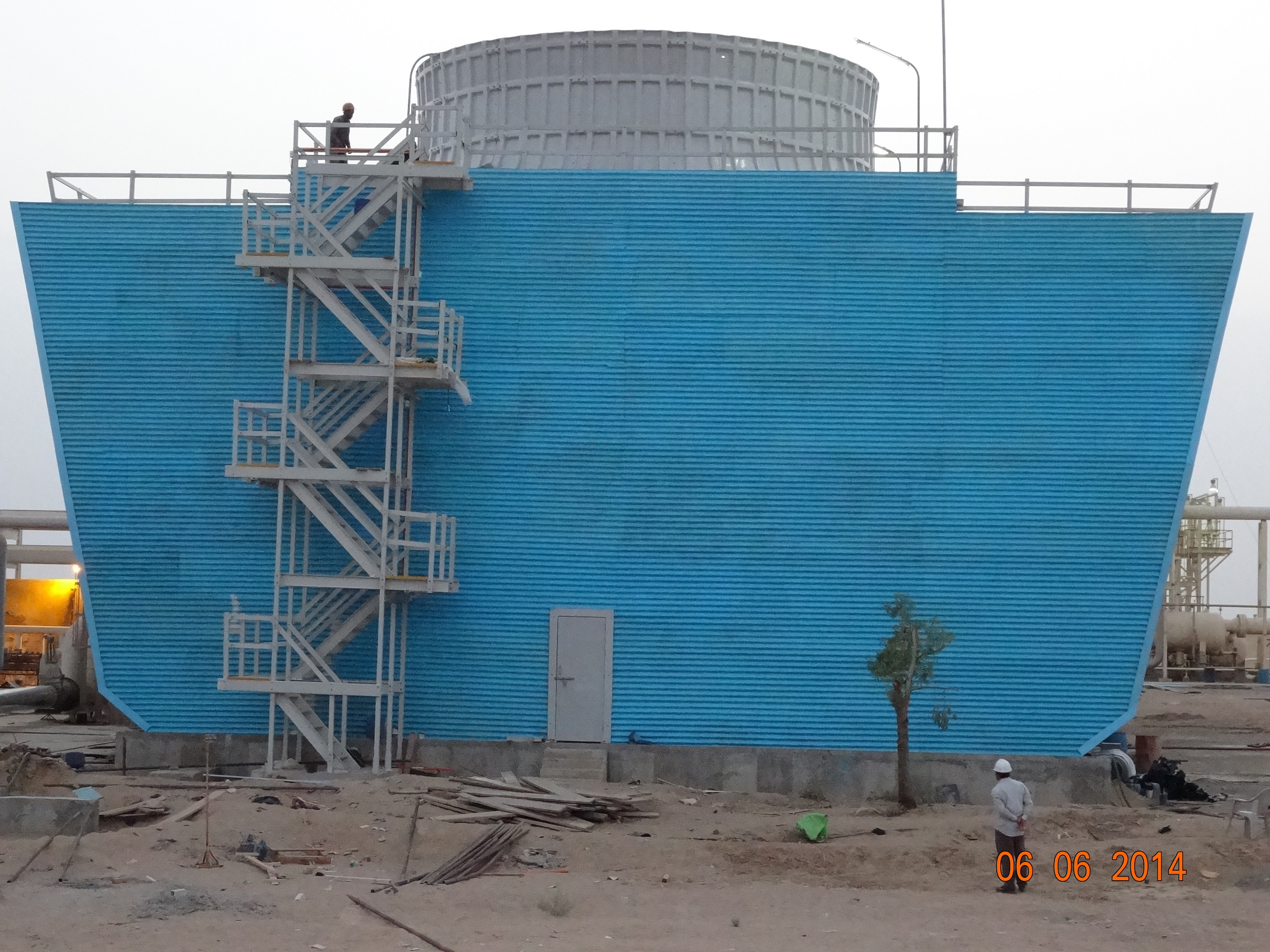
FCI Composites designs, manufactures and installs cooling towers for industrial process cooling, chiller plants and commercial HVAC systems across Pakistan.
Each system is selected around the actual heat load, recirculating water flow, hot and cold water temperatures, site wet bulb temperature, water quality, available space and operating schedule.
FCI supplies compact package units, factory-assembled systems, closed-loop evaporative coolers and large field-erected towers. The stated capacity range starts at about 50 refrigeration tons and extends to large industrial projects of up to 500,000 refrigeration tons, subject to project-specific engineering.
Planning a new system, plant expansion or tower replacement?
FCI Composites provides engineered heat-rejection systems for chemical plants, textile mills, power facilities, fertilizer plants, oil and gas sites, manufacturing units and commercial buildings.
The scope can include system selection, structural design, component manufacturing, site installation and commissioning. FCI also manufactures several important parts in-house, including fan blades, fill media, drift eliminators, water distribution parts, fan stacks, casings, louvers and support structures.
This control over design and production helps match the materials and components to the actual operating environment. Motors, gear reducers, speed reducers and drive shafts come from external mechanical equipment suppliers, which gives buyers a clearer view of what FCI makes directly and what it sources.
A tower does not perform according to tonnage alone. Two plants with the same cooling load may need different equipment because their wet bulb temperature, water chemistry, airflow restrictions, operating hours or target cold water temperature differ.
Poor selection can cause:
FCI Composites reviews the thermal duty and physical site conditions before recommending the configuration, number of cells, structural material, fill type, airflow and water distribution arrangement.
The right type depends on cooling load, water condition, process sensitivity, site space and maintenance strategy. FCI’s current product range covers four main system groups.
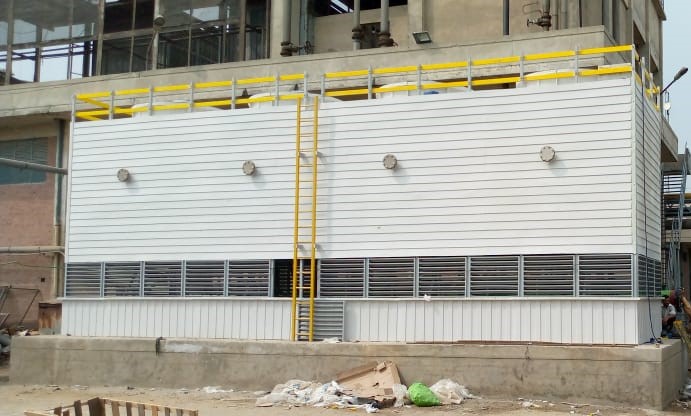
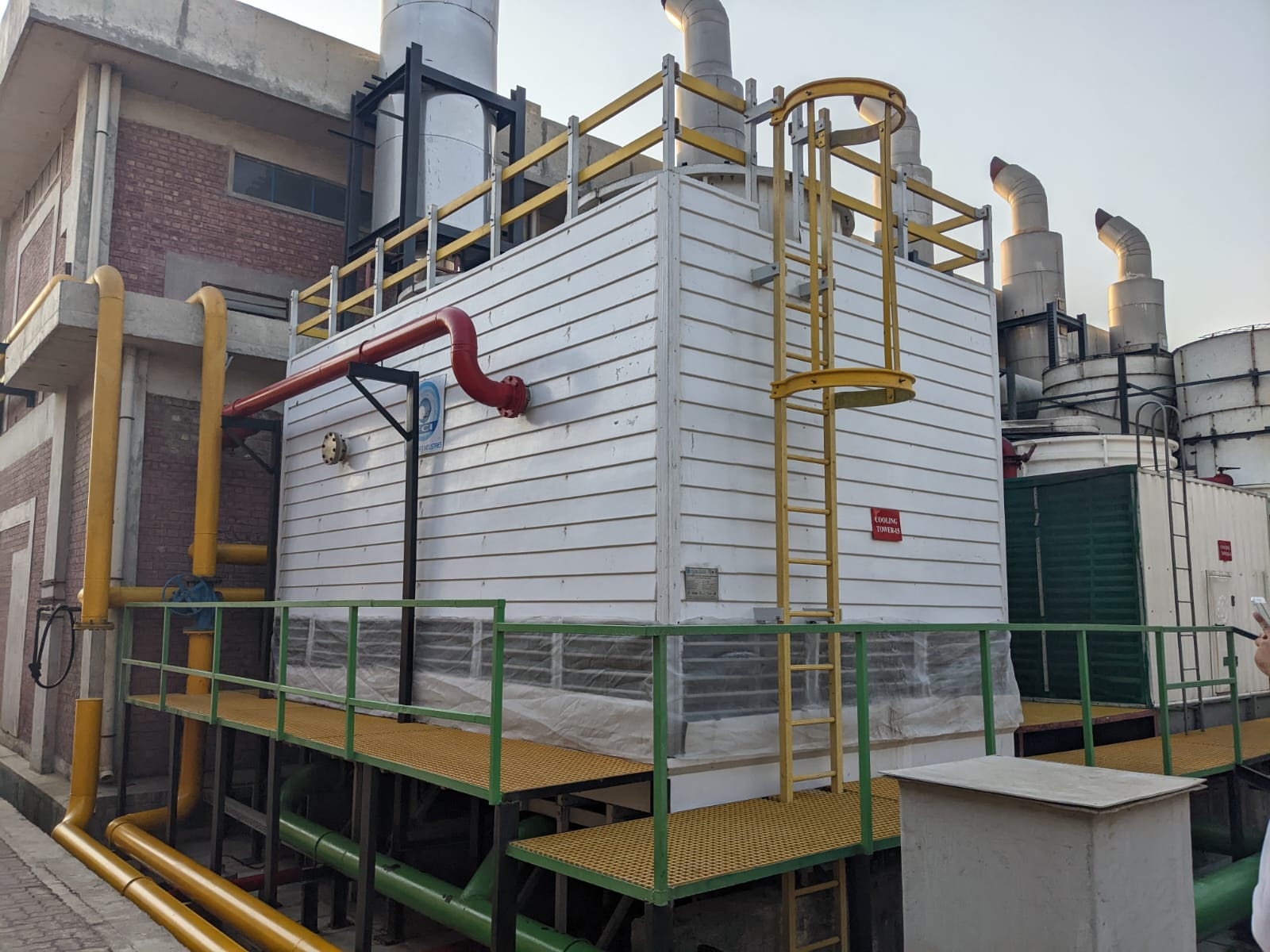
Package towers are compact units designed for faster transport and installation. They work well for small and medium industrial processes, commercial buildings, HVAC systems and chiller condenser-water loops.
A factory-assembled tower reaches the site with much of the casing, structure and internal equipment already assembled. Factory production supports closer dimensional checks and reduces the amount of work required at the project location.
A closed-loop system keeps the process fluid inside a coil rather than exposing it directly to the tower air and spray water. This protects sensitive process fluid from outside contamination.
Closed-loop equipment can suit process machinery, power systems, oil and gas support services, HVAC loops and industrial applications where fluid cleanliness matters. The tradeoff is that coil condition, spray-water treatment and heat-transfer surface cleanliness still require attention.
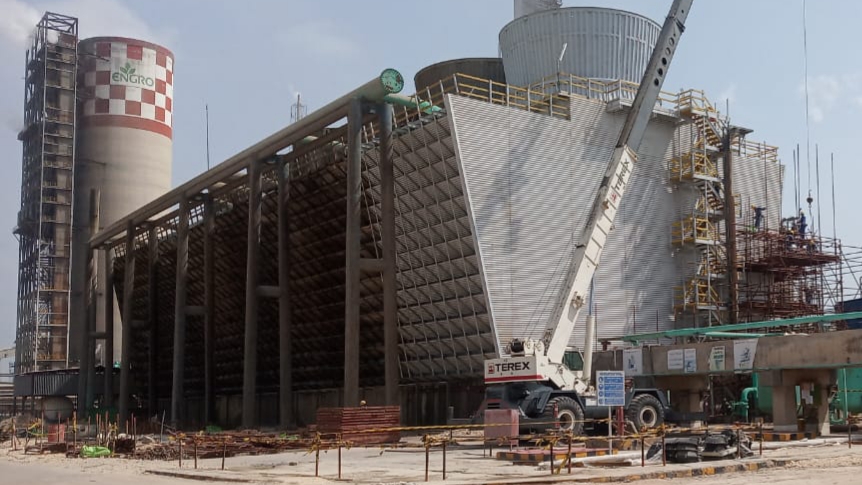
A field-erected tower is built at the project site for high water flow rates, large heat loads or layouts that cannot use a standard package unit.
These systems can be divided into several cells so the plant can match operating capacity to changing demand. Field erection also gives the engineering team more freedom to plan the basin, structure, fan arrangement, maintenance access and water distribution around the plant layout.
In a counterflow design, water moves downward while air travels upward in the opposite direction. This arrangement can provide high thermal performance within a smaller plan area, but access to the water distribution system may differ by design.
.jpeg)
In a crossflow design, air moves horizontally through water falling from above. Crossflow towers often provide easier access to the distribution area and internal components. Some industrial crossflow designs also allow inspection or replacement of certain parts while another cell remains online. gement is automatically better. The decision should consider:
An open-circuit tower brings recirculating process or condenser water into direct contact with air. It normally gives strong evaporative heat transfer with fewer heat-transfer barriers.
A closed-loop tower keeps the process fluid inside a coil. Spray water and air cool the outside of that coil. This reduces contamination of the process loop but adds another heat-transfer surface that must remain clean.
A package system arrives as one or more transportable modules. It normally needs less construction at the site and can shorten replacement or expansion work.
A field-erected system is designed and assembled around the plant. It becomes the stronger choice when the required water flow, heat load, cell arrangement or structure exceeds practical package limits.
Moisture, chemical vapors, hard water and outdoor exposure can attack unprotected steel structures. Coastal and chemical-processing sites may face even faster corrosion.
FCI Composites offers fiberglass reinforced plastic and pultruded FRP structural options. Pultrusion forms structural sections with continuous glass reinforcement, creating lightweight members that resist rust and many forms of chemical attack.
FRP can reduce repainting and corrosion repair, but the correct resin system, laminate design, joint details and structural calculations still matter. Fiberglass does not prevent scale from forming on fill, nozzles, basins or heat-transfer surfaces. Scale comes from water chemistry, temperature and concentration, not from the tower casing material.
FCI evaluates the site, water condition, chemical exposure, budget and structural duty before recommending fiberglass pultruded sections, steel, RCC or another material arrangement.
A useful quotation starts with operating data. A request that only says “500 TR tower required” leaves out several conditions that control final performance.
Heat load shows how much heat the system must reject. It may be stated in kilowatts, BTU per hour or refrigeration tons.
For a chiller plant, tower heat rejection is normally higher than the chiller’s refrigeration load because the tower must reject both the cooling load and heat added by the compressor. The exact relationship depends on the chiller and operating point.
Water flow may be given in GPM, LPM or cubic meters per hour. Flow affects tower size, pipe dimensions, pump duty, nozzle selection and distribution-system design.
A high flow rate with a small temperature change can represent the same heat load as a lower flow rate with a larger temperature change. This is why flow and temperature data must be reviewed together.
Hot water temperature is the temperature entering the tower. Cold water temperature is the target temperature leaving it.
The difference between these values is the range:
Range = Hot water temperature − Cold water temperature
For example, water entering at 40°C and leaving at 32°C has an 8°C range.
Wet bulb temperature represents the evaporative cooling condition of the entering air. A wet tower cannot normally cool water below the entering wet bulb temperature.
The difference between the leaving-water temperature and entering wet bulb is the approach:
Approach = Cold water temperature − Wet bulb temperature
If the target cold water temperature is 32°C and the design wet bulb is 28°C, the approach is 4°C. A smaller approach normally requires a larger or more energy-intensive tower because the target water temperature sits closer to the evaporative limit.
Dust, fibers, chemical vapors and nearby exhaust sources can block fill, damage materials or allow warm discharge air to return through the tower inlet.
The layout should account for prevailing wind, wall clearances, neighboring towers, air intakes, discharge height and maintenance access.
A continuously operating plant may need several cells rather than one large unit. Multiple cells let operators reduce fan operation at low load, isolate a cell for maintenance and retain partial cooling if one section stops.
The required standby capacity should appear in the proposal. A buyer should not assume that a multi-cell layout automatically includes full redundancy.
Provide as much of the following data as possible:
When some values are unknown, send the equipment datasheets, chiller schedule, heat-exchanger duty or existing tower nameplate. FCI can review the available information and identify the missing design inputs.
.jpeg)
Chemical plants often combine high heat loads, corrosive vapors and process water that may contain contaminants. Material resistance, fill selection and access for cleaning carry as much importance as nominal capacity.
FCI can design around continuous duty, chemical exposure, available shutdown periods and the need for multiple cells.
Textile operations may need cooling for dyeing, finishing, compressors, chillers and central HVAC systems. Fibers and dust can collect in air passages, while fluctuating production loads change the required cooling duty.
The system should provide accessible fill and distribution components so maintenance teams can inspect and clean them without extended production stops.
Fertilizer and power plants often require large flow rates and continuous operation. Field-erected, multi-cell systems can support large duties and planned maintenance strategies.
The proposal should define operating cells, standby capacity, structural material, fan-drive arrangement and performance conditions.
Oil and gas facilities may require cooling for process equipment, utility systems, compressors and heat exchangers. Hazardous-area motor requirements, site corrosion and access restrictions may affect the mechanical and electrical specification.
These requirements should be identified before final equipment selection.
An open tower may remain suitable when the process water passes through a separate heat exchanger. A closed-loop evaporative cooler may be considered when the process fluid itself must stay isolated.
The full process arrangement—not the industry name alone—should decide whether an open or closed configuration fits the duty.
HVAC towers reject heat from a water-cooled chiller’s condenser loop. Selection should match the chiller schedule, condenser-water flow, wet bulb condition, available roof or plant-room space and noise limits.
A nominal TR label does not replace the chiller manufacturer’s required condenser-water temperatures and flow.
Correct installation protects the thermal and mechanical design. A suitable unit can still underperform when piping, airflow, fan rotation or water balancing is wrong.
A typical FCI project process may include:
During commissioning, the team should check actual water flow, entering and leaving temperatures, wet bulb temperature, fan rotation, motor current, vibration, nozzle coverage, basin level and makeup operation.
A single temperature reading does not prove rated performance. Thermal testing must account for measured flow, heat load and entering-air conditions.
A tower does not always need full replacement. A site inspection may show that the structure remains serviceable while the fill, distribution system, drift eliminators, fan or mechanical drive needs attention.
FCI Composites can assess projects involving:
The review should compare repair cost, expected remaining life, operating losses and shutdown risk. Replacing only the most visible damaged part may not solve the original thermal problem.
Water treatment protects fill, pipes, heat exchangers, basins and mechanical equipment. It also reduces the risk of uncontrolled biological growth.
A practical program normally addresses:
Makeup water replaces evaporation, blowdown, drift and any leaks. Unexplained increases in makeup demand may point to basin overflow, a leaking valve, excessive blowdown, damaged eliminators or an unrecorded system loss. s can support Legionella growth when sediment, biofilm, poor disinfectant control, favorable water temperatures or stagnation develop.
FCI Composites brings more than three decades of fiberglass manufacturing and cooling-system experience to projects in Pakistan.
Its cooling tower offering includes:
FCI started its operations in Lahore and has completed work across Pakistan. The company designs around the actual plant duty rather than treating every textile mill, chemical plant, power project or chiller system as the same application. Cooling Tower Proposal
A useful proposal begins with accurate operating information.
Send FCI Composites:
FCI’s engineering team can review the duty, identify missing information and recommend the tower type, number of cells, structural material and component arrangement for the project.
Contact FCI Composites to request a technical and commercial cooling tower proposal in Pakistan.

.jpeg)
.jpeg)


.jpeg)

.jpeg)
.jpeg)