uPVC roofing sheets are sold as a cheap, modern alternative to metal. In Pakistan's climate, they are not reliable.
PVC and uPVC roofing sheets installed in Pakistan frequently show signs of premature deterioration. Common issues include cracking, water leakage, sheets blowing away in storms, and UV degradation.
This article explains, point by point, why uPVC fails here and why FRP (Fiberglass Reinforced Polymer) sheets, often called fiber sheets or fiberglass sheets in Pakistan, are the right choice for roofing and cladding on industrial and PEB sheds.
uPVC is a plain thermoplastic. Under heat and sunlight it softens, degrades, and becomes brittle. Once brittle, it cracks, its fastener points give way, and it can be torn off by wind.
FRP is a fiberglass-reinforced composite. The glass fibers carry the load, the thermoset resin does not soften in summer heat, and a UV-resistant gelcoat or film protects the surface for 20+ years.
If your building faces Pakistani summers, monsoon storms, strong sun, or an industrial atmosphere, PVC is the wrong material.
PVC / uPVC sheets are made from polyvinyl chloride, a thermoplastic. "uPVC" simply means unplasticized (rigid) PVC, which is what most roofing sheets are. There is no reinforcement inside the sheet; the plastic itself carries every load.
FRP sheets are made by embedding continuous fiberglass reinforcement in a thermoset resin (polyester, isophthalic, vinylester, or epoxy), then protecting the surface with a UV-stabilized film or gelcoat. Quality FRP sheets are produced on continuous lamination lines for uniform thickness and strength.
That single difference, reinforced composite versus unreinforced plastic, explains almost everything that follows.
This is the most common failure we see on site.
New uPVC sheets feel flexible. After a few seasons of Pakistani sun and heat, they lose that flexibility. Ultraviolet radiation breaks down the PVC polymer, and repeated daily heating and cooling accelerates the process. The sheet turns hard, chalky and brittle.
Brittle uPVC cracks from:
Cracks usually start at the screw holes and along the corrugation ridges, then spread across the sheet. Once a crack opens, water gets in and the leak follows.
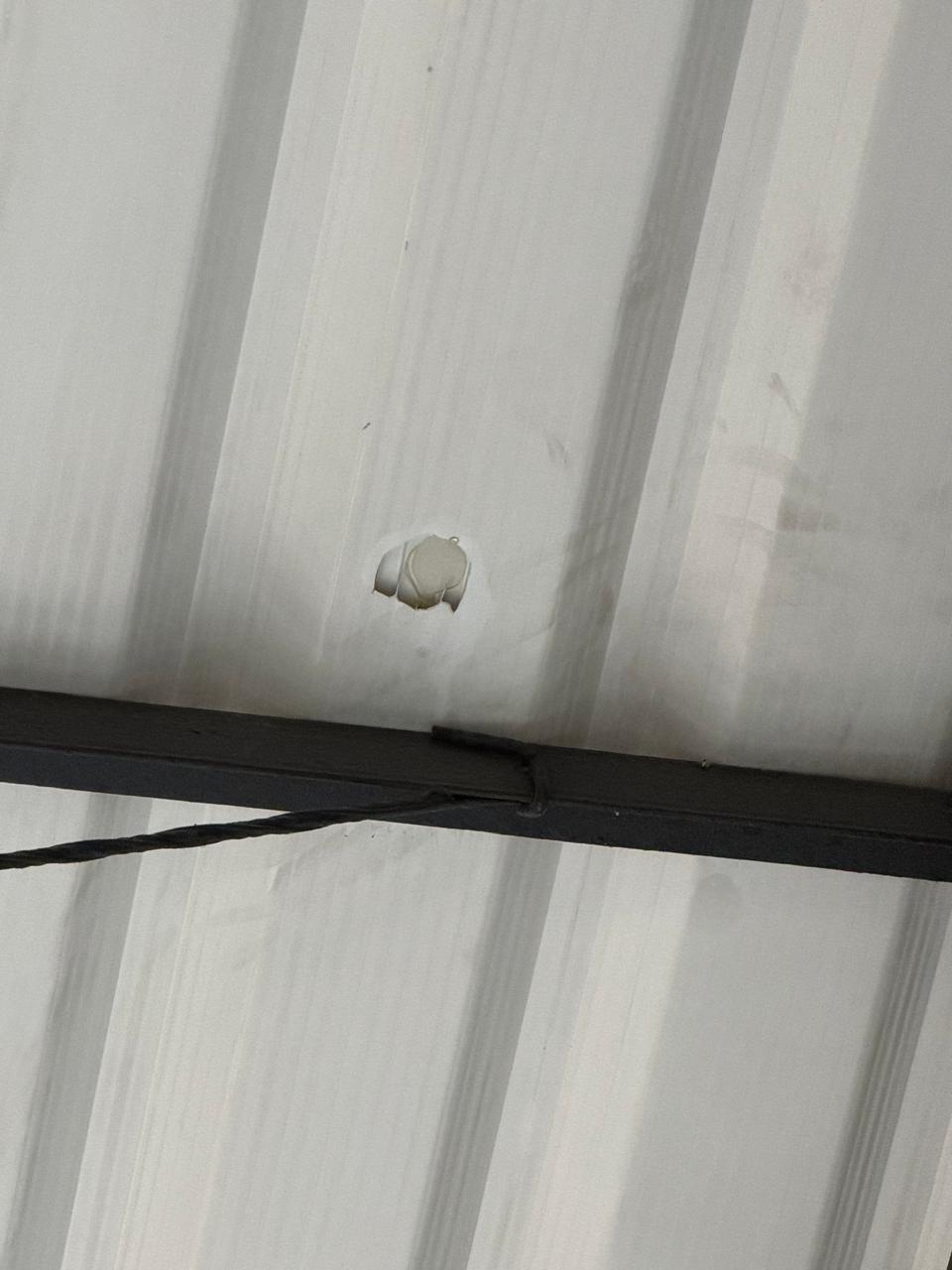
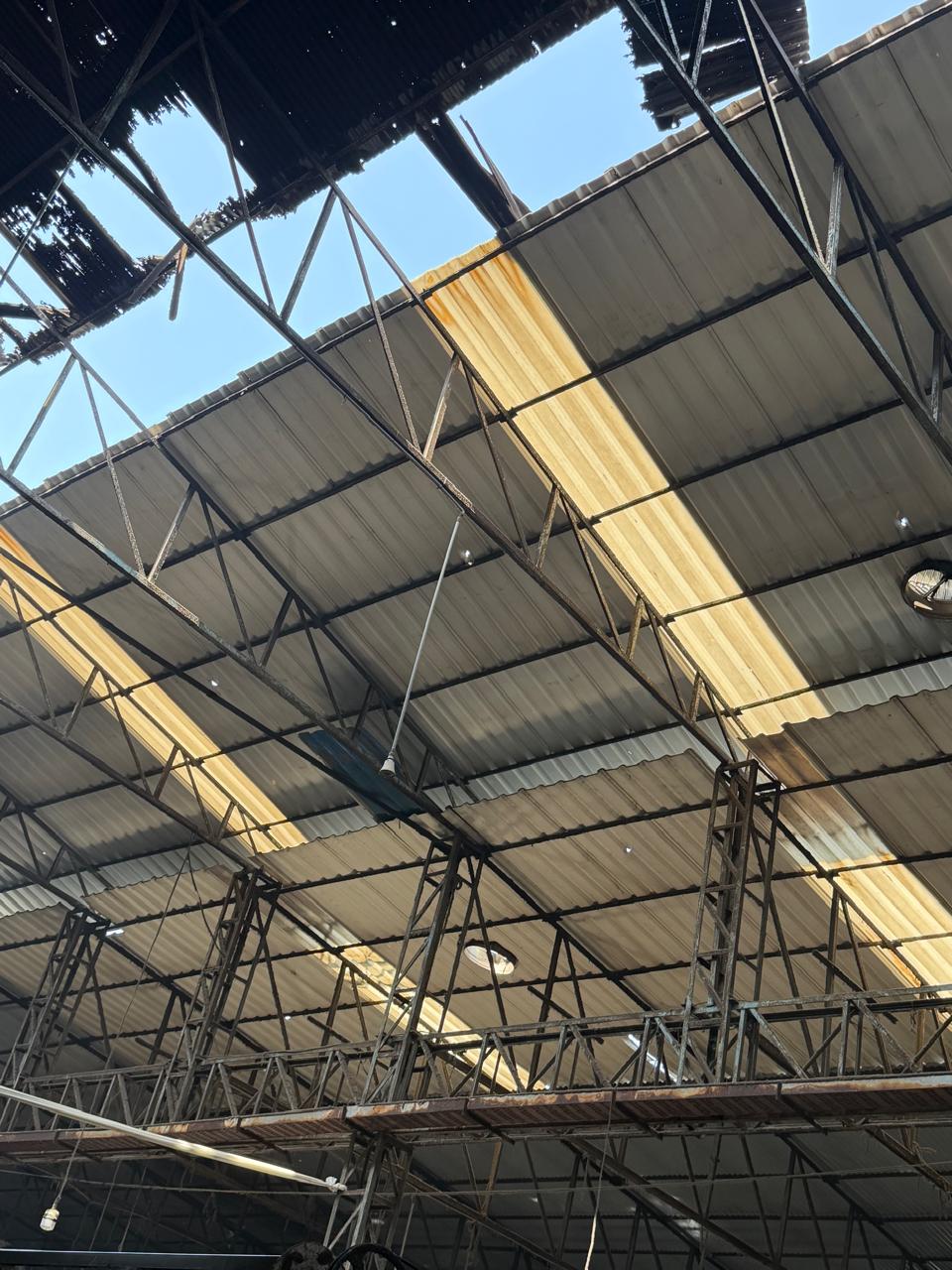

FRP does not behave this way. The fiberglass reinforcement holds the sheet together and keeps its impact strength over its service life. A UV-stabilized gelcoat or film protects the surface from degradation in the first place.
Pakistan's pre-monsoon and monsoon storms bring strong gusts. This is when weakened uPVC roofs fail completely.
The failure happens in a predictable sequence:
A sheet that blows off is not just a repair cost. It can damage vehicles, equipment and neighbouring property, and it is a serious hazard to people below.
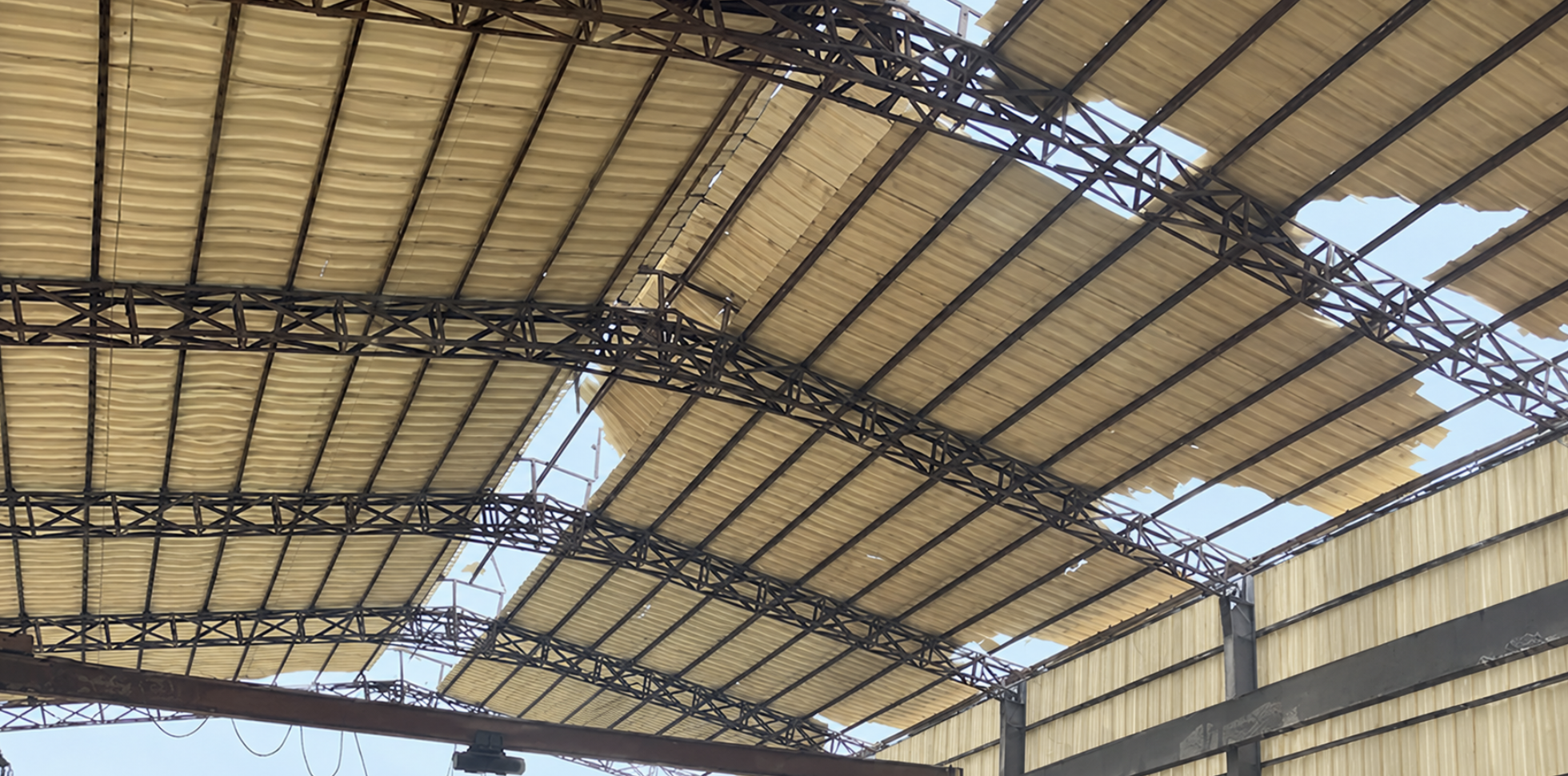
FRP sheets stay put. Their lower thermal expansion keeps fastener holes stable, and the reinforced material around each fixing stays intact under wind load.
uPVC begins to soften at relatively low temperatures. Rigid uPVC typically starts to deform at around 65°C.
That is a real problem here. Ambient temperatures across Punjab and Sindh regularly cross 45°C in summer, and a roof sheet in direct sun gets considerably hotter than the air around it. Coloured sheets get hotter still.
The result:

FRP is rated from −40°C to +120°C. Its thermoset resin does not soften at roof temperatures, so the sheet keeps its profile summer after summer. FRP also has low thermal conductivity, which helps keep the interior cooler.
Pakistan receives intense sunlight for most of the year. UV radiation is the main reason PVC sheets age so quickly here.
As PVC degrades under UV, it:
Some uPVC sheets are sold with surface coatings to slow down colour fading. Those coatings protect the surface colour, but the uPVC core underneath still has the same low softening temperature and the same high thermal expansion. A coated PVC sheet is still a PVC sheet.
FRP with UV-resistant gelcoat offers excellent UV protection. The gelcoat layer on the outside of the sheet shields the reinforced core from sunlight, weathering and colour fading, while a protective film or veil protects the underside. The structure is built for long-term outdoor exposure.
More and more factories and warehouses in Pakistan are installing rooftop solar. If your roof will carry solar panels, uPVC sheets are a poor and unsafe choice.
Here's why:
FRP is the right base for solar. It retains its strength and impact resistance over the long term, holds fixings securely, and has a long lifespan.
Safety note: on any sheeted roof, FRP included, maintenance crews should use proper FRP walkways rather than stepping directly on the sheets.
Many Pakistani industries, including textile dyeing, tanneries, chemical plants, fertilizer units, water treatment plants and galvanizing works, produce corrosive fumes and vapours.
uPVC handles some chemicals at room temperature, but its chemical resistance drops sharply as temperature rises. On a hot roof that is also exposed to acid fumes and UV, uPVC degrades far faster.
FRP is engineered for these environments. By selecting the right resin, such as isophthalic or vinylester, FRP sheets can be matched to the specific chemicals present on site. That is why FRP is the standard material for cooling towers, scrubbers, chemical plants and water treatment facilities.
FRP gets its strength from continuous fiberglass reinforcement bonded in resin. Quality machine-made FRP sheets offer high tensile and flexural strength.
uPVC has no reinforcement. Its strength depends entirely on the plastic, and that plastic weakens every year it spends in the sun. A sheet that passed the "bend test" in the shop is not the sheet you will have on your roof two summers later.
Neither FRP nor uPVC rusts like metal. The real difference is how each material holds up when corrosion combines with heat and sunlight, which is exactly the situation on a Pakistani industrial roof. FRP, with the right resin, maintains its chemical resistance in these combined conditions. PVC does not.
This is where uPVC is at its weakest. Its low softening point means it sags in summer, and its high thermal expansion means it is constantly moving against its fixings. FRP stays dimensionally stable across the full range of Pakistani weather, from winter fog to peak summer heat.
FRP sheets with UV-resistant gelcoat or UV-stabilized film are built for long outdoor service. uPVC is inherently vulnerable to UV, and surface coatings only delay the visible signs of ageing on the outside.
FRP is the right roof for:

PVC/uPVC sheets usually cost less upfront. In the long term, however, PVC sheets become very costly.
Count what a uPVC roof actually costs over its life:
An FRP roof is installed once and lasts decades with only periodic cleaning. Over the life of the building, FRP is the more economical choice.
PVC and uPVC roofing sheets are not built for Pakistan. They turn brittle, crack, sag in the heat, and break loose in storms. They are unsafe under solar installations and unreliable in industrial environments.
FRP is the right choice in every respect that matters: strength, durability, heat resistance, UV resistance, chemical resistance, storm performance and lifetime cost.
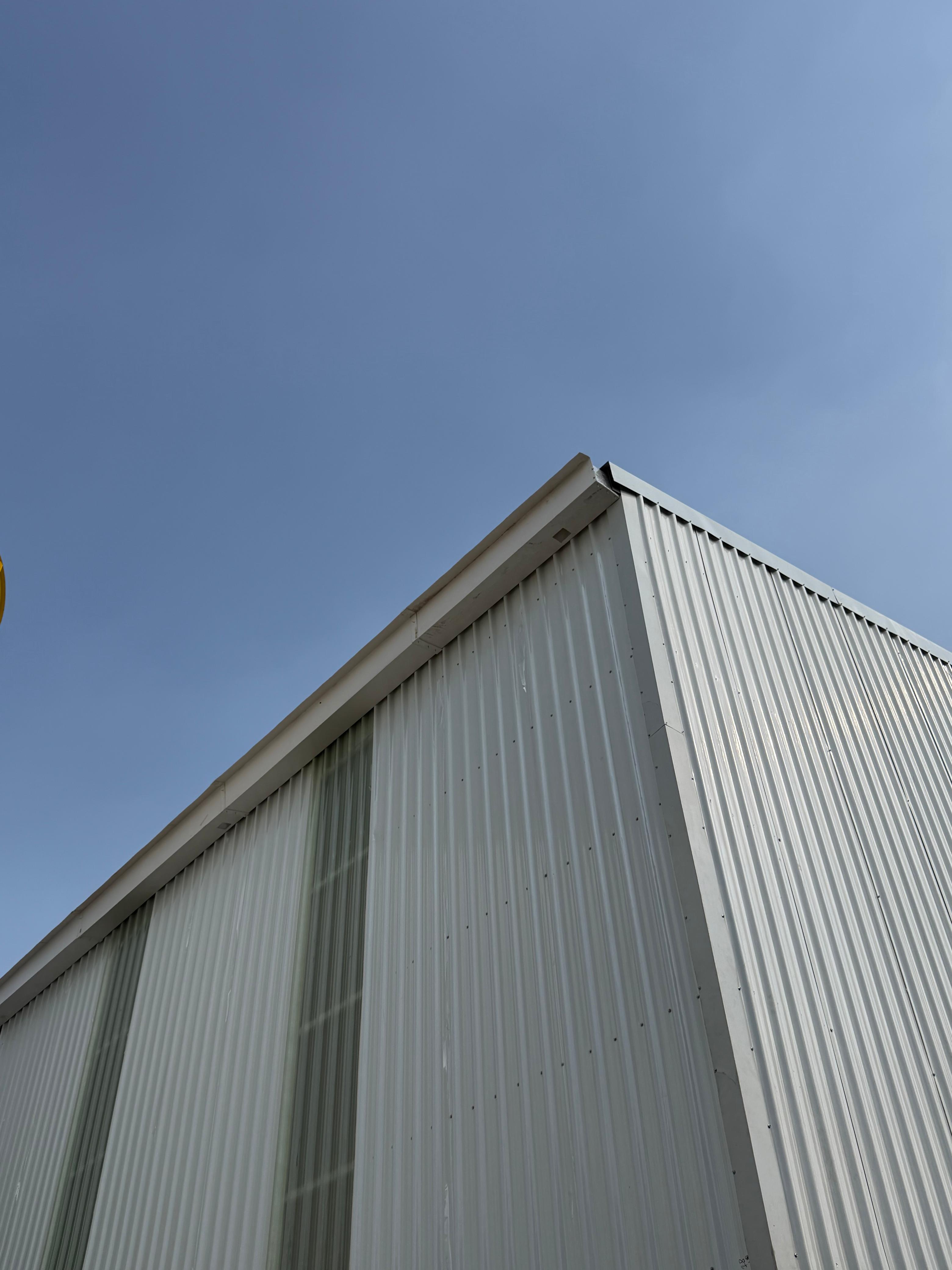
Our FRP roofing and cladding sheets are manufactured by Fibre Craft Industries, Pakistan's FRP composites specialist with over 40 years of experience. Our sheets are produced on continuous lamination lines with UV-resistant gelcoat or film, in custom lengths, profiles and colours.
Whether you're building a new PEB shed or replacing a failed PVC or metal roof, our team can recommend the right FRP sheet, resin and profile for your project.
Contact us for specifications and a quotation:
Fibre Craft Industries Pvt. Ltd. — Canal Bank, Hanif Park, Harbanspura, Lahore 54850
Phone: +92 305 4440339
Email: projects@fcicomposites.com